

How to get a scaffolding quote that actually holds up
The three details that separate a real scaffolding quote from a number pulled out of thin air — and how to make sure you're comparing like for like.
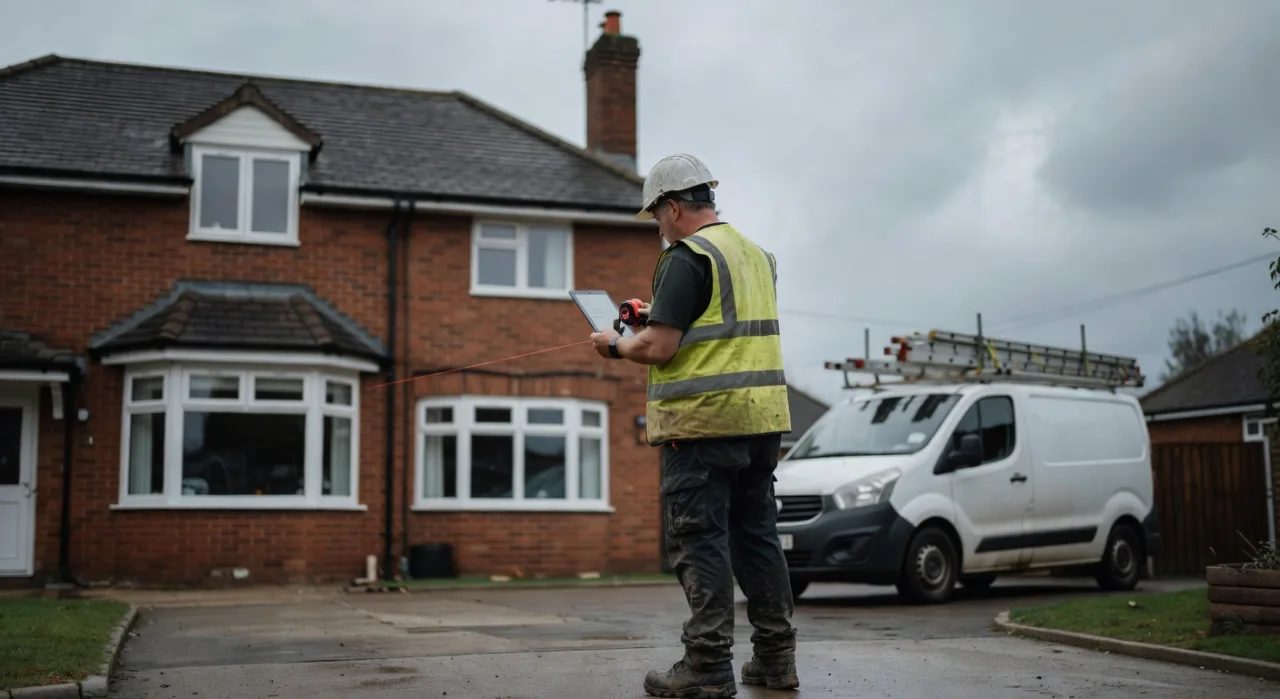
If you’ve ever asked three scaffolders for a quote on the same job and got three wildly different numbers back, you’re not alone. It happens because there isn’t one standard way to price a scaffold — and the less information a scaffolder has about your property, the more they’ll pad the number to cover themselves.
Here’s what a proper quote looks like, and what to ask for when you’re gathering yours.
What a real quote includes
A scaffolding quote should tell you, at minimum:
- Where the scaffold goes — which walls, how many lifts, and roughly how long the run is in metres.
- What it’s for — re-roofing, painting, pointing, chimney work, render — each job has different requirements for working platform width, edge protection, and loading.
- How long it stays up — weekly hire after the initial period adds up quickly on longer jobs.
- Who’s responsible for what — pavement licences, skip permits, parking suspensions, neighbour access. A lot of “surprise extras” come from these being unclear.
- Inspection schedule — statutory inspections every seven days are a legal requirement under the Work at Height Regulations 2005. If they’re not in the quote, something’s not right.
The three details that make the biggest difference
1. Exact perimeter
Rough estimates like “a small terrace” can mean anywhere from 8 to 18 metres of scaffold. If the quote doesn’t reference a measured perimeter, it’s guesswork. We use a satellite-based quote wizard where you trace the walls needing scaffold directly on a map — gives us the exact length down to the metre.
2. Access constraints
A terraced house with rear access through a neighbour’s garden is a completely different job from one with side access. Tight front pavements might need a pedestrian tunnel. A gable at the top of a long slope needs specific bracing. These things aren’t problems — but they’re priced differently, and you don’t want to find out halfway through the job.
3. Ground conditions
Soft ground, tiled surfaces, pavement crossings, and sloping drives all affect what base plates and sole boards you need. Again — not a problem, but it’s in the quote or it isn’t.
Red flags to watch for
- A verbal quote with no written follow-up. Get it in writing. Always.
- No mention of insurance. Your scaffolder should carry minimum £5 million public liability. If they can’t tell you their insurer, walk away.
- Cash-only, no invoice. You want an invoice for your records, and for any VAT reclaim.
- No CISRS cards on site. CISRS is the industry’s card scheme — all our crews carry them. If a scaffolder can’t or won’t show them on arrival, that’s a problem.
What we do differently
Every quote from Stoneley Scaffolding is fixed price, in writing, within 24 hours. We use satellite imagery and Street View to size up the job before we even get to site — so the number you get is the number you pay. No “we didn’t realise the back was tighter” surprises on day one.
When we do come to site, it’s either to start the job or to confirm something we couldn’t see from aerial imagery — not to tell you the price has gone up.
Get a quote using our site-survey wizard, or give Chris a call on 07925 869 437.
Need scaffolding in Hampshire or the South?
Get a fixed-price quote within 24 hours. No obligation.