

TG20:21 — what it is, and why your scaffolder should care
The industry guide every competent tube-and-fitting scaffolder works from — and why asking about it is one of the quickest ways to filter good scaffolders from the rest.
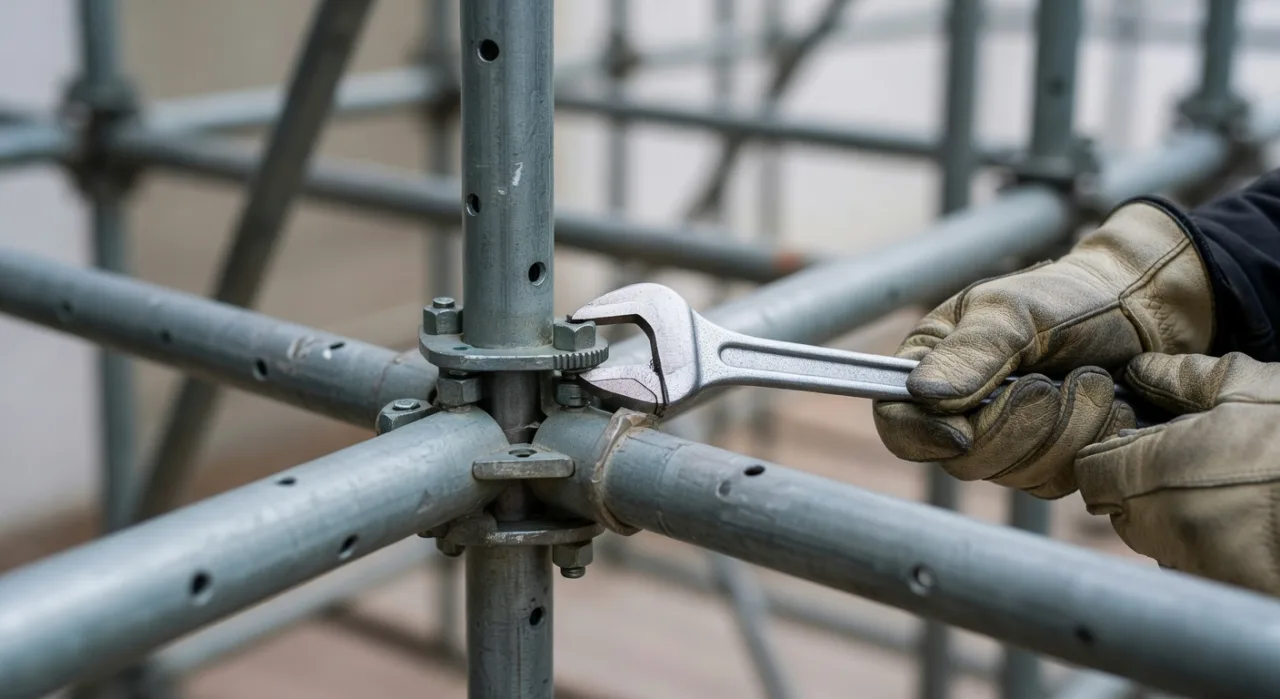
If you’ve ever worked on a commercial site, you’ve probably seen TG20:21 referenced in method statements and on pre-construction paperwork. It’s the compliance spine that tells a competent scaffolder how to design, erect, and inspect a tube-and-fitting scaffold that’s actually safe.
What it actually is
TG20 is the NASC’s (National Access & Scaffolding Confederation) technical guidance for tube-and-fitting scaffolding. The :21 is the 2021 revision — the current standard at time of writing. It covers:
- Maximum permissible heights for different scaffold configurations
- Tie patterns and tie-off points
- Load classes and working platform widths
- Bracing requirements
- Edge protection and toe board specifications
- Base dimensions and ground-bearing requirements
It comes with a companion tool called the eGuide, which most professional scaffolders use to check that a given configuration is compliant before the job starts.
Why it matters to you
As a builder or site manager
A non-compliant scaffold isn’t just a safety risk — it’s a liability risk. Under the Work at Height Regulations 2005 and CDM 2015, the principal contractor has legal duties around ensuring work equipment is safe. If the scaffold isn’t TG20:21-compliant and something goes wrong, “the scaffolder said it was fine” is not a defence.
As a homeowner
For domestic jobs, TG20:21 compliance is less of a paperwork exercise and more of a marker that you’re dealing with a scaffolder who knows what they’re doing. Ask any scaffolder quoting your job whether the scaffold will be TG20:21-compliant. The ones who say “yes, of course” and can explain why are the ones you want.
Where SG4:22 comes in
TG20 tells you what a compliant scaffold looks like. SG4:22 — also published by NASC — tells scaffolders how to work on it safely while they’re erecting and dismantling it. It mandates:
- Fall-prevention equipment during erection (personal fall protection systems)
- Exclusion zones around the work area
- Specific sequence-of-work rules
- Harness attachment points
If you see a crew erecting scaffold without harnesses above 4 metres, that’s an SG4:22 breach. Worth flagging.
What to ask when you’re gathering quotes
- “Will the scaffold be TG20:21-compliant?” — should be yes without hesitation.
- “Are your crews CISRS-carded?” — CISRS is the industry’s competence card scheme. PAYE crews with up-to-date cards are the standard to look for.
- “Who does the seven-day inspections?” — statutory inspections under Reg 12 of the Work at Height Regulations are a legal requirement. A competent scaffolder does these and signs them off in writing.
- “What’s your public liability cover?” — £5 million minimum for most commercial work.
Our standard
Every Stoneley Scaffolding job is:
- Designed to TG20:21 (or engineer-designed where the configuration is outside TG20’s scope)
- Erected to SG4:22
- Inspected weekly with written sign-off
- Crewed by CISRS-carded PAYE operatives
- Covered by £5 million public liability
If you want to check the detail on a specific scaffold, ask us. We’d rather explain why something is the way it is than have it be a mystery.
Get a quote via our site-survey wizard or call 07925 869 437.
Need scaffolding in Hampshire or the South?
Get a fixed-price quote within 24 hours. No obligation.