

Do I Need a Pavement Licence for Scaffolding? UK Rules Explained
If any part of your scaffold sits on a public pavement or road, you need a licence from the local highway authority. Here's what the licence covers, what it costs, and who applies for it.
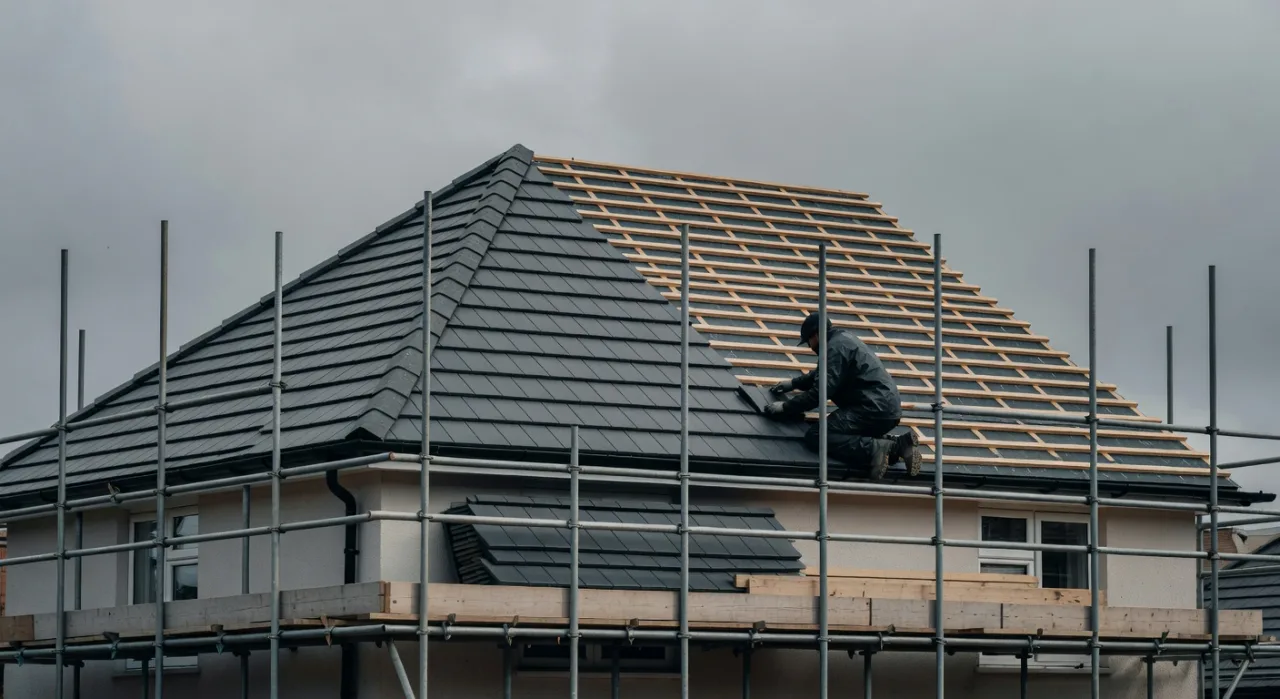
Short answer: yes — if any part of the scaffold touches a public highway (including the pavement), you need a licence from the local highway authority. This applies to almost every terraced and semi-detached property in the UK, because the scaffold base plates sit on the pavement while the working platform extends over the house.
Your scaffolder usually applies for it, but you pay the fee. Here’s how it works and what to expect.
Which scaffolds need a licence
You need a highway licence if the scaffold:
- Sits on the pavement (footway)
- Sits on the road (carriageway)
- Oversails a public highway (e.g. working platform hangs over the pavement even if the base plates don’t touch it)
You don’t need a licence if the scaffold is entirely within private property — for example, a scaffold erected in your back garden on a detached house, or a commercial scaffold entirely within a fenced site compound.
The legal basis
The licence requirement comes from Section 169 of the Highways Act 1980:
A person shall not for the purpose of building, demolishing or repairing any premises erect or retain on or over a highway any scaffolding or other structure which obstructs the highway unless he is authorised to do so by a licence in writing granted for the purposes of this section by the highway authority.
Translated: put a scaffold on the road without a licence and you’re committing an offence. The scaffolder is the one who gets prosecuted, but the inconvenience (and the cost) lands on the job.
Who applies for the licence
The scaffolder applies, on your behalf, as a condition of their insurance and operating terms. They have to — most scaffolding public liability policies require a valid licence on every job that touches the highway.
The fee gets passed through to you. It appears on the quote as either:
- “Pavement licence fee — at cost” (the scaffolder adds whatever the council charges)
- “Highway licence included” (bundled into the headline price)
Always check which — the quote should make it clear.
How much a pavement licence costs
Fees vary by local authority. Typical 2026 ranges across the South:
| Council | Typical licence fee | Validity |
|---|---|---|
| Hampshire County Council (Winchester, Eastleigh, etc.) | £90 – £250 | 28 days, extendable |
| Southampton City | £120 – £280 | 4 weeks |
| Portsmouth City | £100 – £240 | 28 days |
| Isle of Wight | £80 – £180 | 28 days |
| West Sussex CC | £110 – £260 | 28 days |
| Surrey CC | £130 – £350 | 28 days |
These are representative figures — councils update fees annually so always check the current rate on the council website or take the scaffolder’s quoted figure as accurate. Extensions beyond the initial period typically cost an additional 50–100% of the base fee.
How long a licence takes to issue
Most UK councils issue scaffold licences within 5–10 working days from application. Urgent jobs (less than 7 days’ notice) may attract a surcharge — Hampshire charges an extra £70–£120 for urgent applications.
This is why we ask about preferred start dates up front. If you need the scaffold up next Monday, we need to apply for the licence Thursday at the latest, and ideally by Wednesday.
What the licence covers
- The scaffold footprint on the pavement or road
- Public access — the licence specifies whether pedestrians can still pass (most do, via a pedestrian tunnel or walkway) and whether the scaffolder needs to provide temporary signage
- Lighting — scaffolds on highways must be lit with amber beacons or white warning lights at night
- Period — councils issue licences for a fixed number of days, typically 28 or 4 weeks
What the licence does not cover
- Road closures — if your scaffold requires the road to be closed or parking bays to be suspended, that’s a separate application (usually via the local parking services team)
- Skip licences — if you’re having a skip too, that’s its own permit
- Building control — scaffold licence is a highway matter; the work happening on the scaffold may need separate building control or planning approval
Pedestrian tunnels
On pavement-mounted scaffolds, the council will usually require a pedestrian tunnel — a covered walkway under the scaffold so pedestrians can still pass safely. This adds:
- Materials cost (typically £200–£500 for the tunnel section)
- Lighting requirements
- Potentially signage and directional barriers
If the pavement is too narrow to provide a tunnel and a working scaffold, the council may require the footpath to be closed and pedestrians diverted onto the road via a coned-off walkway — a much more expensive arrangement.
Penalties for getting it wrong
Erecting a scaffold on the highway without a licence is a criminal offence under the Highways Act. Penalties include:
- Fines of up to £1,000 on summary conviction, plus costs
- Removal orders — the council can force immediate removal at the scaffolder’s expense
- Insurance invalidation — most scaffold PL policies won’t cover incidents arising from unlicensed work
If you’re hiring a scaffolder and they say “we don’t need a licence for this, it’s fine” on a scaffold that clearly touches the pavement — walk away. That’s either ignorance or risk-taking, and neither is what you want.
What to check on your quote
- Is the licence fee included, passed-through, or excluded entirely?
- Who applies — you or the scaffolder? (Should be the scaffolder.)
- What’s the licence duration and what happens if the job overruns?
- Is a pedestrian tunnel required and is it priced in?
- Is night-time lighting included?
How we handle it at Stoneley
On every Hampshire and South-coast job:
- We apply for the licence as part of the quote process
- The fee is shown on the quote at cost (no mark-up)
- Pedestrian tunnels are quoted upfront when the pavement is too narrow to share
- Lighting (amber flashers) is included on every highway scaffold
- Extensions beyond the initial licence period are handled by us and billed at cost
Frequently asked questions
Can the council refuse to grant a licence?
Rarely, but yes — usually only if the proposed scaffold would block emergency access, a bus route, or a cycle lane in a way that can’t be mitigated. If that happens, we’ll usually suggest an alternative arrangement (e.g. an independent scaffold with a longer boom from inside the property).
Do I need a licence for a scaffold in a driveway?
No — a private driveway isn’t part of the public highway. You may still need it on the pavement crossover (the dropped kerb section in front of your drive), depending on council definition.
What about a scaffold that only oversails the pavement?
Still needs a licence. “Oversailing” — where the scaffold base is on private land but the working platform extends over the pavement — counts as highway use under Section 169.
Can I get fined for my scaffolder’s unlicensed scaffold?
The scaffolder is the primary duty-holder, but if you knowingly commissioned unlicensed work, you can face liability too. It’s one reason to work only with scaffolders who carry the licensing and insurance admin for you.
How long does licence approval take on an urgent job?
Fastest we’ve had is 48 hours from application, with urgent-fee surcharge. Standard is 5–10 working days. Plan ahead where possible.
Need a scaffold on a pavement-adjacent property? We handle the licence from application through to removal. Get a quote online or call 07925 869 437.
Need scaffolding in Hampshire or the South?
Get a fixed-price quote within 24 hours. No obligation.